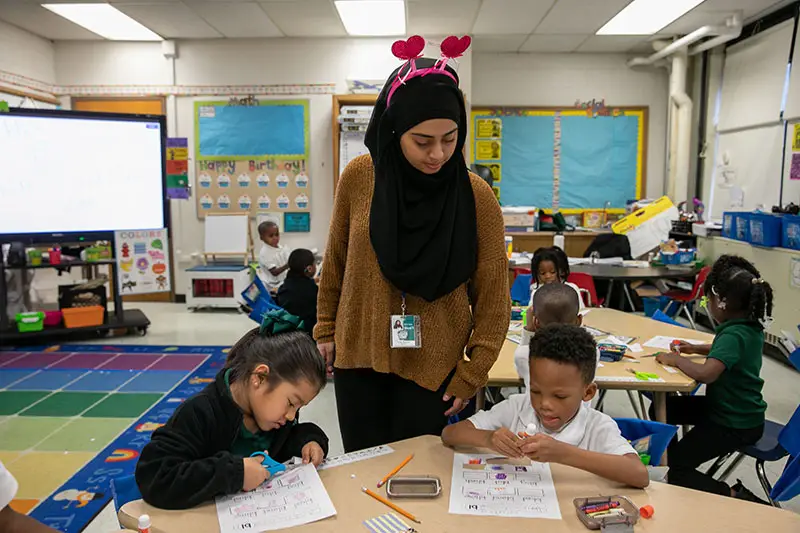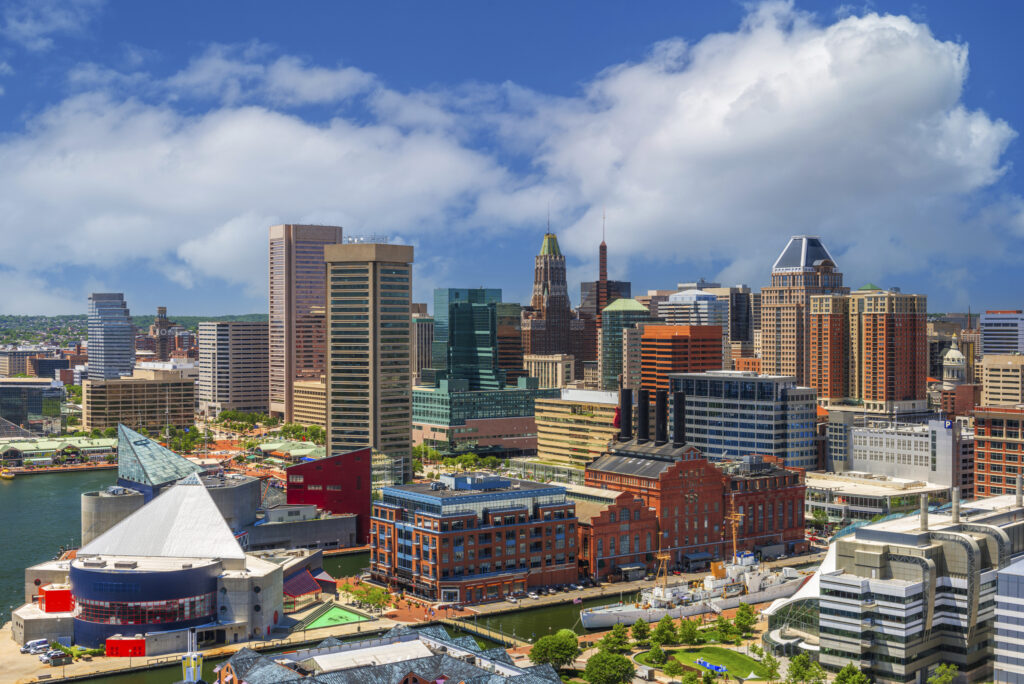
Teaching in Baltimore is not just a job change; it is an entry into a city where education, culture, and community are deeply intertwined. For anyone exploring teaching in Baltimore or researching how to become a teacher in Maryland, it helps to understand that this is a place where schools are shaped by history, pride, and a deep commitment to young people. This responsibility is felt the moment you step into a school building. Baltimore, sometimes referred to as “Charm City,” depending on who is saying it and how long they have actually lived here, is a place where identity shows up everywhere, especially in the classroom. From the echo of segregation and desegregation in Maryland public schools to the resilience of communities continuing to expand opportunity and access, education here is constantly evolving alongside the people it serves. Students in Baltimore City Public Schools grow up in a city where culture is layered and shaped by many influences at once. East Baltimore reflects strong Greek and Latin cultural presence, seen in multilingual households, family-owned restaurants, church life, and everyday traditions where food, language, and celebration naturally intersect. West Baltimore carries African, Caribbean, and Jewish influences alongside a long-standing Black cultural foundation, visible in neighborhood life, local businesses, and how people stay closely connected to place and history. Across both sides of the city, higher education and the arts are deeply embedded, with Morgan State University anchoring Northeast Baltimore and Johns Hopkins University shaping research, medicine, and opportunity across the region. The arts are a defining part of Baltimore life, from music and spoken word to visual art and dance, with Baltimore School for the Arts in Mount Vernon cultivating generations of creative talent. That creative influence shows up in figures tied to Baltimore’s cultural footprint, including Tupac Shakur, whose time in the city helped shape his early artistic foundation. Baltimore’s history and educational impact are also reflected in Thurgood Marshall, whose legacy continues to shape conversations around education, access, and opportunity. Everyday life carries its own cultural imprint through Maryland blue crabs, Old Bay seasoning, and neighborhoods like Canton and Federal Hill, each with its own distinct identity within the city.
And of course, you cannot talk about Baltimore without mentioning the Ravens, because even if football is not your thing, you will learn quickly that school spirit, city pride, and community identity are very real here. Across Baltimore City and surrounding counties like Baltimore County, Anne Arundel County, and Howard County, schools are deeply connected to families and local communities that are highly invested in education. For educators stepping into Baltimore teacher jobs, this is a place where learning is deeply connected to history, identity, and everyday life.Here are five things you should know before teaching in Baltimore and Central Maryland.
1. Students Bring Excellence Before You Even Introduce Yourself
Students arrive with identity, creativity, humor, and resilience already fully formed. You are not building something from scratch; you are building upon what is already there. Strong teachers understand quickly that relationships are the foundation of learning. In Baltimore, students will let you know fast whether you are being real, and once trust is built, everything changes.
2. Schools Are Deeply Connected to Community Life
In Baltimore, schools are part of the fabric of the city, not separate from it. Families, neighborhoods, local businesses, churches, community spaces, and cultural traditions all help shape what happens in the classroom. When you look across Maryland more broadly, education can feel organized at the county level in a more visible way than in many other places. Systems like Baltimore County, Anne Arundel County, and Howard County each operate with their own structures, priorities, and approaches to curriculum and instruction, shaped by the needs, histories, and demographics of their communities. As a result, the way students experience school can vary from county to county, including differences in instructional focus, pacing, and local emphasis within state standards. Spending time across these systems makes it clear how distinct each educational environment can feel, and it also highlights the complexity and richness of education in Maryland overall.
3. Teaching Here Requires Flexibility, Humility, and Purpose
No two schools in Baltimore feel exactly the same. Some are fast-paced and structured, others are more relationship-driven, and many are both, depending on the day. Teachers who thrive here stay flexible without losing their grounding. They ask questions, adjust quickly, and stay focused on student growth even when systems or conditions shift around them.
4. There Is a Strong and Expanding Professional Learning Ecosystem
Central Maryland has a strong network of educator support through district programs, universities, and residency pipelines. Historically Black colleges and universities play a major role in shaping educators and leadership across the region, carrying forward a deep tradition of excellence in teaching and learning. Programs like City Teaching Alliance support this ecosystem by preparing teachers through residency-based experiences and additional pathways into Baltimore classrooms, helping them build confidence and practice before leading their own spaces. Learn more here: City Teaching Alliance Baltimore
 5. The Teachers Who Thrive Here Learn the Culture, Not Just the Curriculum
The teachers who thrive in Baltimore quickly learn that culture is not something you add into the classroom; it is something you learn from the moment you walk in. You will hear it in conversations, see it in how students move through the day, and feel it in how communities show up for their schools. From Patterson Park energy in East Baltimore to the deep-rooted pride of West Baltimore neighborhoods, students carry their environment with them everywhere. And at some point, a student will look at you and ask, completely seriously, if you are really from here or just visiting. That is not a test you can fake your way through. It is an invitation to be open. Teachers who stay and grow here are reflective, resilient, and relational.The teachers who thrive in Baltimore quickly learn that culture is not something you add into the classroom; it is something you learn from the moment you walk in. You will hear it in conversations, see it in how students move through the day, and feel it in how communities show up for their schools. From Patterson Park energy in East Baltimore to the deep-rooted pride of West Baltimore neighborhoods, students carry their environment with them everywhere. And at some point, a student will look at you and ask, completely seriously, if you are really from here or just visiting. That is not a test you can fake your way through. It is an invitation to be open. Teachers who stay and grow here are reflective, resilient, and relational.
If you are exploring Baltimore teacher jobs or thinking about your path into education, Baltimore and Central Maryland offer a place where excellence is expected, community is real, and growth goes both ways.