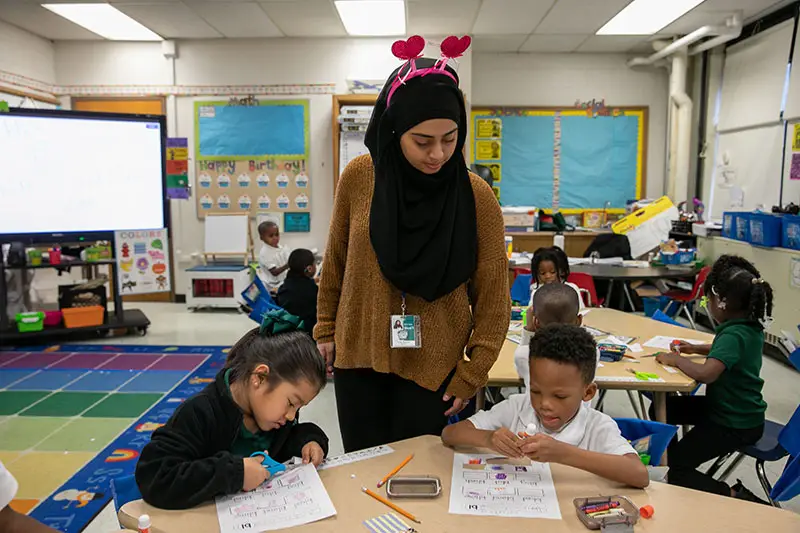
The first month of school can feel a little like trying to assemble furniture without the instructions. You are learning names, figuring out routines, answering a million questions, adjusting lesson plans, navigating new expectations, and somehow trying to remember where you put your coffee.
For teachers, the beginning of the school year is a different kind of busy. There is a lot to figure out, and sometimes it can feel like everything needs to happen at once. But underneath all the schedules, procedures, lesson plans, and classroom decorations is something much more important: building relationships.
The first 30 days are an opportunity to get to know your students, build trust, and create a classroom where students feel comfortable being themselves, asking questions, making mistakes, and trying again. Before students can fully engage in learning, they need to know that they belong. And that takes time.

Start With Relationships
Learning a student’s name is just the beginning. What do they enjoy? What are they curious about? What makes them laugh? What are they proud of? What do they want you to know about them?
Small moments matter. A quick conversation at the door, remembering something a student shared, asking about their weekend, or noticing when something seems a little off can go a long way toward building trust. Relationships do not have to be complicated. Sometimes, they start with simply showing up and paying attention.
Students notice when their teachers care about them as people, not just as names on a roster or scores on a spreadsheet. Those small moments can become the foundation for a classroom where students feel comfortable participating, asking for help, and taking academic risks. You may not know everything about your students in the first month, and that is okay. Building relationships is not something you check off a list. It is something you continue doing throughout the year.
Build Routines That Create Belonging
Routines help classrooms run smoothly, but they can also help students feel secure.
When students know what to expect, they can spend less energy figuring out what comes next and more energy focusing on learning. Whether it is how students enter the classroom, where they turn in assignments, how discussions work, or what happens when they need help, a strong level of predictability gives students a sense of structure. But routines should leave room for flexibility, too.
Every class is different, and every group of students brings its own personality. What works on day one might need a little tweaking by week three. Maybe the transition that looked perfect in your lesson plan takes twice as long in real life. Maybe your carefully planned seating arrangement needs to be reconsidered. Maybe the five-minute activity somehow becomes a 20-minute conversation. That is teaching.
The goal is not to create a classroom where everything goes perfectly. The goal is to create a classroom where students know what to expect, feel welcome, and understand that they are part of the community.
Know Your Students Beyond the Data
Grades, assessments, attendance, and other data can tell teachers a lot about how students are doing. But they do not tell the whole story. Getting to know students means looking beyond the numbers and learning about the whole child. Their experiences, interests, cultures, strengths, questions, and goals all shape how they show up in the classroom.
Maybe the student who rarely raises their hand is incredibly talkative during small-group work. Maybe the student who struggles with an assignment is actually very confident when they can explain their thinking out loud. Maybe a student’s favorite hobby gives you the perfect connection for an upcoming lesson.
When teachers take the time to understand their students, they can create learning experiences that feel more relevant, meaningful, and connected.
It also reminds us that students are always more than a test score or a grade on an assignment.
Give Yourself Permission to Learn
Here is something every teacher needs to hear: you do not have to have it all figured out in the first 30 days. Some lessons will go exactly as planned. Others will not. A routine that looked great on paper might completely fall apart in practice. A student may surprise you. You may walk out of a class thinking, “Well, that was not what I expected.”
That is part of teaching.
The first month is not just a learning period for students. Teachers are learning, too.
You are learning which explanations make sense to your students. You are learning when to slow down, when to push forward, and when to completely rethink your approach. You are learning what your students need from you and what you need from yourself.
Reflection is part of the work. Teachers grow by noticing what is working, recognizing what is not, making adjustments, and trying again.
The First Month Reality Check
By week four, your perfectly organized classroom may look a little different.
Your cute classroom rug probably already has dirt on it from recess. Someone has definitely forgotten a pencil. The supply bin you organized on Monday may already look like it survived a small natural disaster. There is probably a mystery water bottle somewhere in the room. And that classroom routine you were so sure would work? It might need a little tweaking. That is okay.
The first month of school is not about creating a picture-perfect classroom. It is about creating a classroom that works for your students.
Some days will feel smooth, and others will leave you wondering if your lesson plan, your patience, or both have officially left the building. Take it one day at a time. Learn as you go, make changes when needed, and keep moving forward.
The goal is not perfection. The goal is progress.
Ask for Feedback and Support
Teaching is a lot to carry on your own, especially when you are still finding your rhythm.
Sometimes the most helpful thing you can do is ask someone else what they see. A mentor, coach, colleague, or fellow educator may notice something you missed or offer a strategy that makes a difficult moment feel a little more manageable. Feedback is not a sign that you are doing something wrong. It is an opportunity to keep growing.
Great teaching does not happen in isolation. Educators grow when they have opportunities to learn alongside experienced teachers, receive meaningful coaching, ask questions, reflect on their practice, and belong to a community that believes in their potential.
That is an important aspect of the City Teaching Alliance experience. Through coaching, mentorship, coursework, certification, clinical experience, and care, Fellows are supported as they grow into educators and leaders. They are given opportunities to learn, practice, reflect, receive feedback, and continue developing throughout their journey.
Because supporting teachers means supporting students.

Remember Why You Started
The first month can be exhausting. There will be long days, unexpected challenges, lessons that need to be rewritten, and moments when you question whether you are doing enough.
Then there will be the moments that remind you why you started.
A student who finally understands something they have been struggling with. A quiet student who raises their hand for the first time. A former student who stops by to say hello. A laugh that fills the classroom. A small moment when you realize that your students trust you. Those moments matter.
They remind us that teaching is about more than getting through the curriculum. It is about creating spaces where young people can learn, grow, feel seen, and believe in what is possible for themselves.
At City Teaching Alliance, we believe when educators are supported, they are better equipped to create classrooms where students feel supported, challenged, and ready to grow.
So whether you are stepping into your first classroom or starting another school year, give yourself some grace.
Learn your students. Build the relationships. Establish the routines. Try the lesson. Adjust the lesson. Ask for help when you need it. Celebrate the small wins. Laugh when the classroom rug inevitably becomes a magnet for dirt.
The first 30 days matter, but they are just the beginning.
You do not have to have everything figured out. You just have to keep showing up, keep learning, and keep creating a classroom where your students know they belong.